" (literally boss-ship, the state of being the boss over those of darker skin), the term preferred by his predecessors. My liberal parents were very concerned about Dr. Verwoerd’s plans to take South Africa out of the British Commonwealth, and make it into a republic, with no allegiance to any other country, no respect for any other authority. Not that the British were examples of the finest democratic, egalitarian ideals, but they were a lot better than the people in the South African government of the time – these were committed ideologues, who believe strongly in apartheid, the idea of white supremacy, the idea that the white Afrikaners of South Africa were a superior race – superior to the Blacks, the Jews, the Catholics and all English speaking whites.
I went campaigning with my father, encouraging people to vote No in the referendum to decide whether South Africa should become a republic. We lost that referendum, and soon afterwards Dr Verwoerd proudly led South Africa out of the group of Commonwealth nations – not a very smart move, seeing that membership in the Commonwealth was very helpful in terms of trade agreements, etc.
I set out to question the prevailing stories they told us in school, the prevalent myths that the white South Africans told themselves and each other. When Verwoerd’s republic finally became reality, they took out much of the day at the government schools, and gave each of us a flag and a Republic medal. I was outraged. A few of us went outside after school closed and burned the flags, and spit on the medals.
So, it was this milieu which helped spark my desire for a quest for truth, an exploration to find out what is really true Truth of the social sphere. Political truth. And some very puzzling questions I pondered – such as the question concerning why so many other people are content to live their lives in a lie.
I read books, and spoke to people who seemed to be inquiring into some of these questions. However, you had to be careful who you spoke with in South Africa. Asking certain radical questions with the wrong people could get you arrested!
I also realized that there are political truths – truths which are "out there’, as well as inner truths, truth concerning self. I became interested in psychoanalysis and began reading all I could in that realm. I looked around for people to discuss with, and was fortunate to be able to encounter a Prof. Hurst, of the department of psychiatry and genetics at the University of the Witwatersrand (Wits University). Although we were not in agreement on certain techniques then prevalent in psychiatry, we engaged in an extended series of conversations, discussing the nature of consciousness, how one liberated oneself from mis-understandings, and so on.
Exploration of the political, and exploration of inner truths are both dynamic activities, exploring the nature of changing, dynamic systems. This is the beginning of living philosophy.
Since those times, I have continued to be engaged in questioning the prevailing truths of each society I’ve lived in, and the nature of truth in itself. Fortunately, each society I encountered actually supplies certain means of searching for truth – even an oppressive police-state society such as South Africa’s in the 1960s. The South African government did what they could to ban what they considered subversive, but they were unable to keep up. I recall, for example, ordering the book, Counter Culture, edited by Joseph Berke. It arrived at the university bookstore with no problem – it hadn’t appeared yet on the radar of the censors and the secret police.
Because freedom of speech was suppressed, there were many people who felt the need to speak out more vociferously. To the extent that one was awake, and aware of the oppressive nature of the regime, one could find ways to explore the truth, and perhaps even find ways to help make sure the truth would be heard. I watched with great interest as various people and groups tried to break through the iron-fisted clampdown, and watched with horrified amazement the government’s moves to suppress dissent, to crush any view that wasn’t in accord with theirs.
This suppression of truth took many forms. It went along with an attempt to tell new stories which would be in favor of the white oppressors. History, for example, was taught in the schools as a story which justified the Afrikaners view of themselves as the noble people who, oppressed by the British in the Cape, had trekked to the Free State and the Transvaal, where they had established their independent republics in the face of fierce opposition from the native peoples. No mention was made of the collaboration of the Afrikaners with the Nazis in the 1930s and 1940s, their admiration of the Nazi ideology, the fact that most Afrikaners stayed at home during the Second World War whilst most English and Jewish citizens went to North Africa to fight the Nazis. It was during this time that the Afrikaners made significant advances in consolidating a base of power, so that they could win the first elections after the war, in 1948.
In any case, it’s not my intention to provide you a comprehensive education into the history of South Africa, and the details of the actions of the revolutionaries and protestors and the oppressors and apologists for the regime. There are many sources where one can find more information on these subjects. For me, the critical aspect of this story is that these societal forces encouraged me to think more deeply, to question more widely the nature of what is.
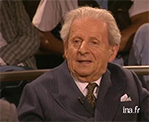
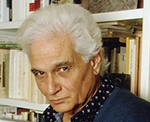
It is not surprising to me that, after studying philosophy for many years since then, and inquiring into truth in one way or another over this long period of time, that I return to philosophers such as R.D. Laing, Jacques Derrida and Emanuel Levinas, philosophers who are concerned with truth not just in the abstract, but who see truth as being inextricably bound up with what our responsibilities are to one another.
It is in this way that I understand the term "living philosophy" – it’s a philosophy which is about life, and concerned with the living. Concerned with you and me. With us. With each one of us and what we owe to one another in the world we find ourselves thrown into today, the world of global economic forces, a world facing profound and difficult questions about our care of the planet – ecology – and a world where various groups proclaim it’s their duty and religious obligation to get rid of other groups.
There is a view of truth, expounded by some in philosophy departments of our prestigious universities, and other places, that truth is a static thing. They talk as if truth were like a mathematical formula – an unchanging entity of some sort – which can be found, described, boxed up and finalized. And if we can’t do all that right now, well then we have most of the elements in place; we’re just waiting for a few other pieces to fall into place and then you’ll have it – the Truth with a capital "T". Living philosophy recognizes that the truths which matter to us in our lives are living truths. As with all living beings, living truth Is dynamic and moves along, changes and transforms. As such, it is not static.
Ever since Freud, there is a recognition that what a person thinks may be true in a given situation may well be influenced by his or her personal experiences. A whole new realm of interpretative possibilities was opened up by Freud. What he was saying, in his time, was pretty radical. He suggested that perhaps people didn’t really know hat they were doing, and only professed to have certain beliefs because they had failed to progress through various stages of psychosexual development. People who were too gullible had perhaps failed to get beyond the oral stage. People who were acquisitive or stingy had become stuck in an anal phase. And so on. More radically, perhaps, Freud suggested that all beliefs in a divine being were a product of a neurosis and an illusion. In his "Future of an Illusion" he foresaw the ugly mess that Germany would fall into through its attempts to elevate an illusion as truth.
Whether we agree with Freud, in terms of any particular interpretation or not, we can thank him for opening up to us the realization that there are forces below the surface which cause phenomena to appear in the foreground – often we face only the foreground phenomenon and must conjecture what this sign (or symptom) reveals about what lies beneath. This force can be operable in the utterances of a person’s life, or it can be found, for example, in a painting, a piece of music, or in a text. In this sense, a text can be seen as living, and so its analysis may well fall under the umbrella of a living philosophy.
In this sense, then, the study and reading of the philosophical texts that have been handed to us n our Greco-Roman-Judeo-Christian culture can very well be living philosophy if it is read and interpreted in such a way as to relate the issues of which the text speaks with the issues of those of us living today.
So, this is a very brief opening up of what I see as the task of living philosophy, the questions that living philosophy seeks to address. Please tell us your view of living philosophy, and pose the questions that you would like to see addressed in this online forum.
Also, please look around our site, and take a look at some of the great materials and readings we have to offer. More readings are on their way. And if you have some piece you’d like to contribute, please contact me and we can probably arrange to get it posted online. And please send us your movie and book reviews to post online.